Research Article
ARA-290 (Cibinetide) Research: Neuroprotection Guide
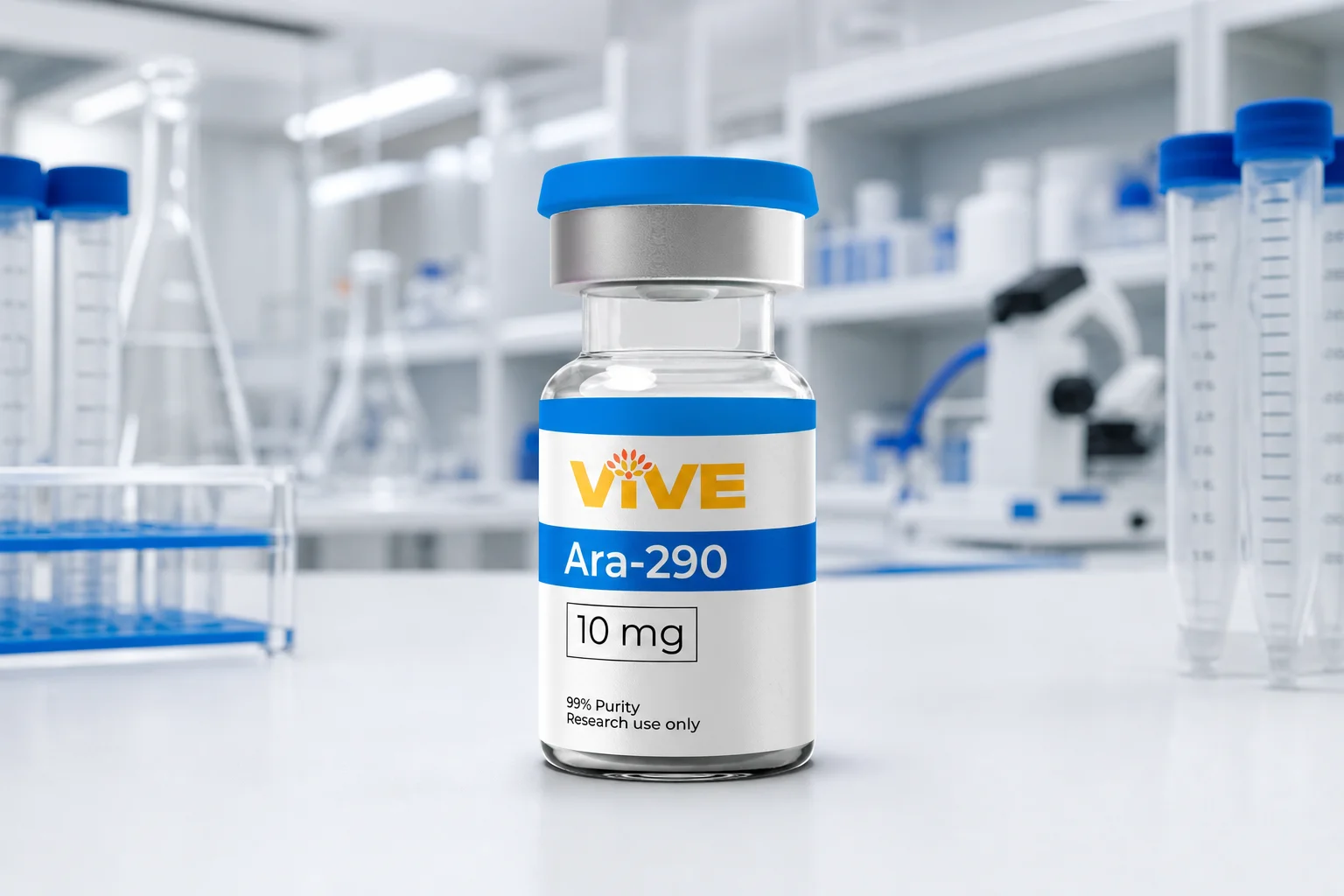
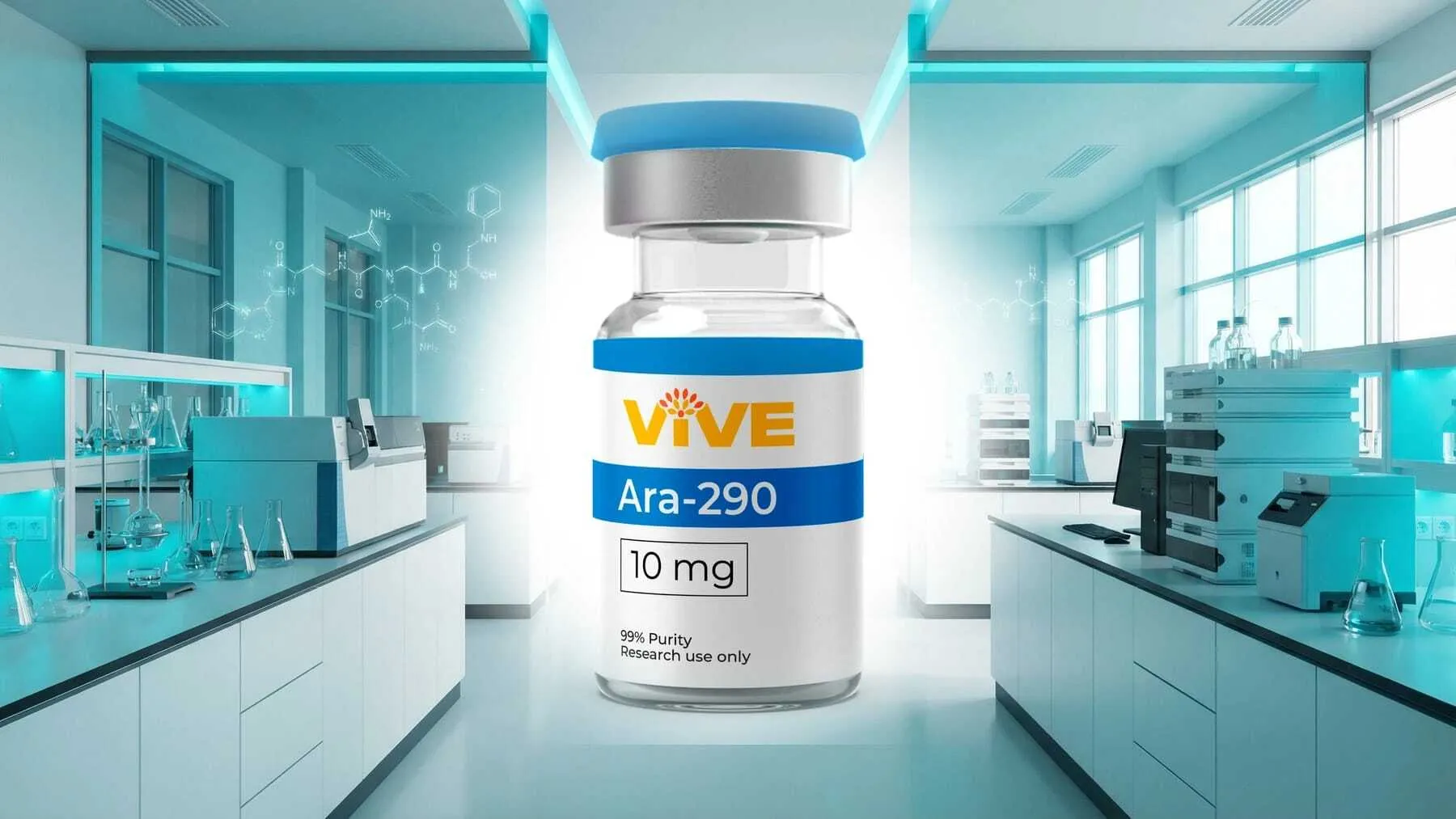
ARA-290 (cibinetide) research focuses on an erythropoietin-derived peptide that selectively activates the innate repair receptor to address neuropathic pain without stimulating red blood cell production. Clinical trials at multiple university medical center sites have documented improvements in small nerve fiber density and neuropathy symptoms. Researchers can source ARA-290 (cibinetide) research peptide from VivePeptides.
By Vive Team
What Is ARA-290 (Cibinetide) and How Was It Developed?
ARA-290, also known by its clinical designation cibinetide, is a peptide derived from the carbamylated form of erythropoietin (EPO). Unlike erythropoietin itself, ARA-290 was engineered to selectively bind the innate repair receptor (IRR), a heteroreceptor complex that does not influence red blood cell production. This distinction is clinically significant: the peptide can be studied for its tissue-protective and anti-inflammatory properties without the hematopoietic side effects associated with EPO.
The compound was first characterized by Dr. Michael Brines and Dr. Anthony Cerami at the Feinstein Institutes for Medical Research in the United States. Their foundational work, published in Proceedings of the National Academy of Sciences (2008), established that EPO-derived peptides could activate cytoprotective pathways through the innate repair receptor, independent of the classical EPO receptor that governs red blood cell production.
The Innate Repair Receptor: ARA-290's Primary Mechanism
The IRR Heterodimer Complex
The innate repair receptor is a heterodimer formed by the EPO receptor (EPOR) and the beta-common receptor. Its primary role appears to be tissue maintenance and repair following cellular injury. When ARA-290 binds the innate repair receptor (IRR), it initiates signaling cascades involving NF-kB modulation, reducing pro-inflammatory cytokine output and activating anti-apoptotic proteins in damaged tissues.
Selectivity Over Erythropoietic Signaling
Because ARA-290 lacks the structural features needed to activate the homodimerized EPOR responsible for red blood cell production, researchers can investigate its effects on neural and immune tissues without confounding changes in hematocrit. This selectivity has made it a subject of considerable interest for neuropathy research and inflammatory disease models.
Small Fiber Neuropathy and Neuropathic Pain Research
Nerve Fiber Density as a Primary Endpoint
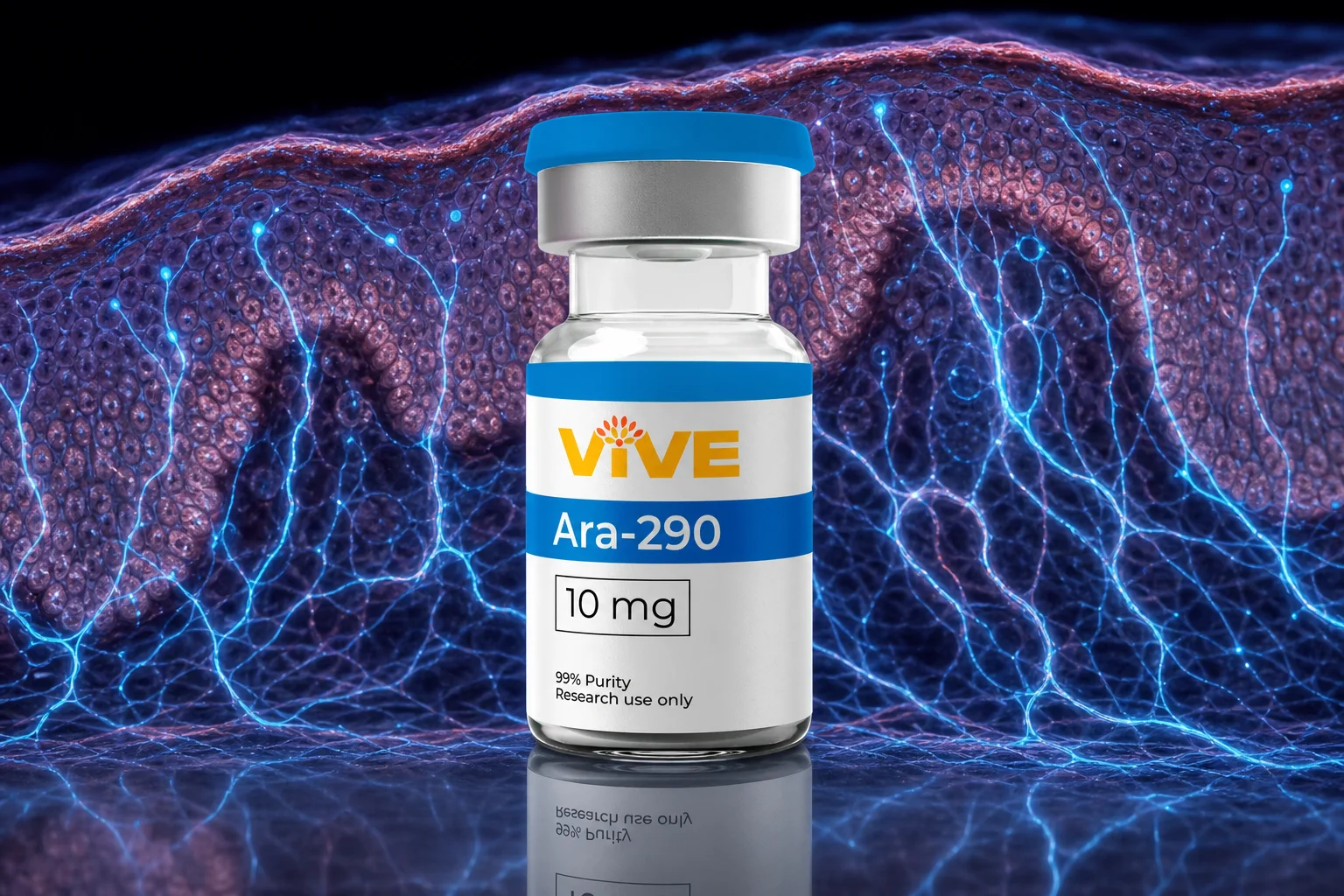
Small fiber neuropathy is a condition characterized by degeneration of the small nerve fibers that transmit pain and temperature signals. Loss of intraepidermal nerve fibers, quantified via skin punch biopsy, serves as the primary objective measure in ARA-290 clinical research.
Investigators at Leiden University Medical Center conducted a randomized controlled clinical trial (2017) enrolling participants with sarcoidosis-associated small fiber neuropathy. Those receiving ARA-290 demonstrated statistically significant increases in intraepidermal nerve fiber density compared to placebo, along with subjective reductions in neuropathic pain. The trial used nerve fiber density scoring consistent with protocols established by university medical center research groups across Europe and the United States.
Neuropathic Pain Score Reductions
Neuropathic pain, assessed using the Small Fiber Neuropathy Symptoms Inventory Questionnaire, showed meaningful reductions in the ARA-290 treatment arms of these trials. Participants reported improved sensory thresholds, reduced burning sensations, and better sleep quality, consistent with improvements in small nerve integrity and innate repair pathway activation.
Anti-Inflammatory Properties and Broader Research Applications
Cytokine Modulation via the Innate Repair Receptor
ARA-290's anti-inflammatory profile derives from its interaction with the innate repair receptor. In preclinical models, activation of the IRR reduced circulating levels of TNF-alpha, IL-6, and IL-1-beta, markers associated with both neuroinflammation and systemic inflammatory disorders. Researchers at multiple institutions have noted these effects appear downstream of NF-kB suppression and are independent of red blood cell production changes.
For research workflows requiring lyophilized peptide preparation, bacteriostatic water for peptide reconstitution is an essential step before any in vitro or in vivo ARA-290 protocol.
Metabolic and Systemic Implications
Beyond nerve fibers, preclinical data have shown ARA-290 influencing metabolic parameters in diabetic animal models, including glucose regulation and renal protection. These findings have prompted early-phase clinical trials examining the compound in type 2 diabetic populations with peripheral neuropathy, extending the scope of ARA-290 (cibinetide) research beyond sarcoidosis and into broader metabolic disease contexts.
ARA-290 (Cibinetide) Research: Clinical Trial Safety and Observations
Multiple clinical trials conducted in Europe and the United States have reported a favorable safety profile for ARA-290 at tested research doses. The Leiden University Medical Center trial documented no serious adverse events attributable to the compound over the study period. Commonly reported observations included mild injection-site reactions and transient fatigue, consistent with profiles seen in similar peptide research.
Crucially, none of the clinical trials to date have reported clinically meaningful increases in red blood cell count or hematocrit, validating the functional separation between the innate repair receptor and the classical EPO receptor pathways in human subjects.
Frequently Asked Questions
What distinguishes ARA-290 from erythropoietin?
ARA-290 (cibinetide) is a peptide derived from erythropoietin but engineered to avoid activating the classical EPO receptor responsible for red blood cell production. It selectively targets the innate repair receptor, which governs tissue protection and anti-inflammatory signaling. This makes it suitable for studying neuroprotective and anti-inflammatory mechanisms without hematopoietic confounders in research settings.
What is small fiber neuropathy and why is it relevant to ARA-290 research?
Small fiber neuropathy involves degeneration of the small nerve fibers that transmit pain, temperature, and autonomic signals. Clinical trials have used intraepidermal nerve fiber density as an objective endpoint to measure ARA-290's neuroprotective effects, with published data from Leiden University Medical Center showing measurable increases in nerve fiber density in treated participants compared to placebo controls.
Has ARA-290 been studied at research sites in the United States?
Foundational research on the innate repair receptor was conducted by investigators at the Feinstein Institutes for Medical Research in the United States. Subsequent clinical trials have enrolled participants at sites across both Europe and North America, with sarcoidosis-associated neuropathic pain among the primary conditions examined in controlled study designs.
Is ARA-290 considered safe based on current research data?
Published clinical trial data report no serious adverse events attributable to ARA-290 at tested research doses. Mild injection-site reactions and transient fatigue were the most commonly noted observations. No significant changes in red blood cell parameters were detected across trials, confirming the functional selectivity of the innate repair receptor pathway in human subjects.
How is ARA-290 typically prepared for research use?
ARA-290 is supplied as a lyophilized powder and requires reconstitution with sterile bacteriostatic water prior to use in research protocols. Standard procedures call for slow addition of the diluent to the vial, gentle swirling rather than agitation, and appropriate cold storage per institutional guidelines.
Explore ARA-290 Research Compounds at VivePeptides
ARA-290 (cibinetide) research continues to generate findings across neuropathy, inflammation, and metabolic models. Researchers ready to begin or expand their protocols can browse the VivePeptides catalog for research-grade ARA-290 and complementary peptide compounds.
Research Use Only
All information in this article is intended for educational and research purposes only. VivePeptides products are not intended for human or veterinary use.