The demand for efficacious anti‑wrinkle peptides has increased substantially. SNAP‑8 and Argireline are two frequently discussed compounds reported to attenuate the appearance of fine lines and wrinkles. This article provides a systematic comparison of these peptides, detailing their definitions, mechanisms of action and relevant clinical evidence. It summarises how each peptide functions, evaluates relative efficacy and outlines best practices for use in research and cosmetic formulation. Upon conclusion, readers should possess a clearer understanding of the comparative suitability of each peptide for academic research or formulation development.
SNAP‑8 and Argireline both exhibit anti‑wrinkle activity but differ with respect to molecular structure and mechanism of action. Characterisation of these distinctions is essential for researchers and formulation scientists within the cosmetic sector.
| Peptide | Molecular Structure | Potency | Research Applications |
|---|---|---|---|
| SNAP-8 | Acetyl Octapeptide-3 | High | Anti-aging formulations |
| Argireline | Acetyl Hexapeptide-3 | Moderate | Cosmetic applications |
This table summarises principal distinctions between SNAP‑8 and Argireline and illustrates how structural variation informs functional efficacy. SNAP‑8 is commonly regarded as exhibiting higher potency and is therefore selected for use in numerous advanced formulations.

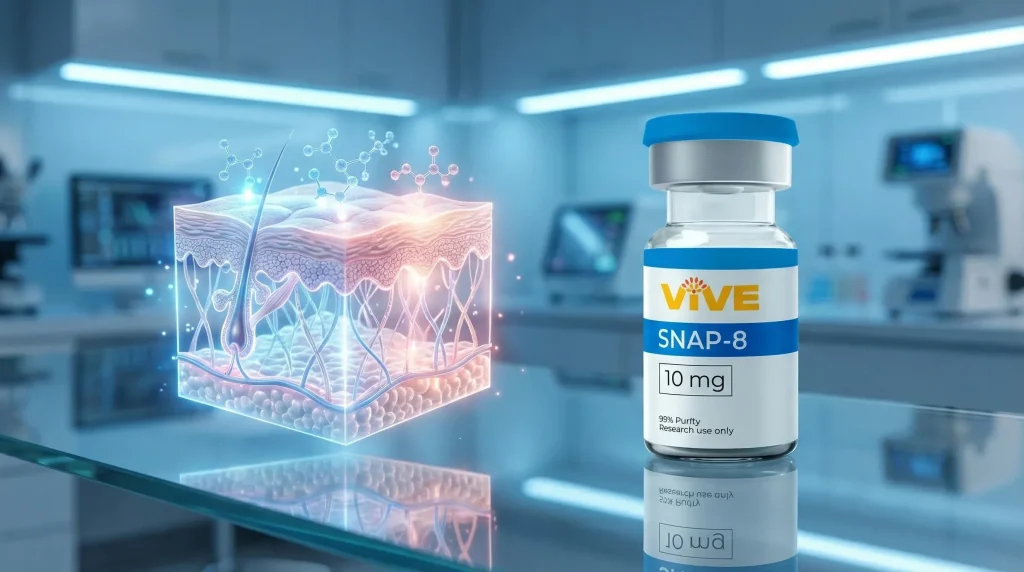
SNAP‑8 (Acetyl Octapeptide‑3) is a synthetic peptide engineered to emulate endogenous proteins implicated in muscle contraction. Its mechanism involves inhibition of neurotransmitter release that triggers muscle contraction, which in turn reduces wrinkle depth and contributes to a smoother epidermal appearance.
Supplementary literature provides additional characterisation of SNAP‑8’s properties and evaluates its potential as an alternative to established treatment modalities.
SNAP-8 Peptide: Argireline Elongation & Botox Alternative
SNAP‑8 peptide, also referenced as Acetyl Glutamyl Heptapeptide‑1, is described as a hexapeptide and is considered an elongation of Argireline. Similar to other hexapeptide‑based compounds, it has been reported to possess substantial potential to reduce wrinkle depth. Some research indicates the peptide may preserve the ideal arrangement of the lipid matrix. Investigations further propose that SNAP‑8 could offer an alternative to Botulinum toxin by targeting the mechanistic basis of wrinkling via a distinct pathway.
Exploring the Potential of the SNAP-8 Peptide
Argireline (Acetyl Hexapeptide‑3) operates by targeting the SNARE complex, which is essential for neurotransmitter exocytosis. By disrupting this process, Argireline reduces facial muscle activity and the development of expression lines. Both compounds are peptides composed of amino acids; reported molecular weights vary, with SNAP‑8 approximately 1047.14 Da and Argireline approximately 888.55 Da.
The anti‑wrinkle activity of SNAP‑8 and Argireline derives from modulation of neuromuscular signalling. SNAP‑8 mimics endogenous peptides that inhibit muscle contraction, thereby reducing dynamic wrinkle formation through attenuation of nerve‑to‑muscle communication and yielding a smoother skin surface.
Argireline specifically interferes with the SNARE complex, inhibiting neurotransmitter release required for muscle contraction. This inhibition decreases muscle activity that contributes to wrinkle formation. Both peptides provide a non‑invasive approach to reducing expression lines and are therefore incorporated into topical cosmetic formulations.

Clinical investigations have produced quantitative data regarding both peptides. Several studies report that topical SNAP‑8 yields significant reductions in wrinkle depth within weeks, with some trials indicating up to a 30% decrease in wrinkle appearance. Argireline has demonstrated more moderate effects, with measurable improvements in skin smoothness and elasticity reported over longer treatment intervals.
A specific randomized, placebo‑controlled study provides a detailed assessment of Argireline’s anti‑wrinkle efficacy and its SNARE‑related mechanism.
Argireline Anti-Wrinkle Efficacy: Clinical Study & SNARE Mechanism
Argireline is a synthetic peptide modelled on the N‑terminal region of SNAP‑25 and has been shown to reduce the degree of facial wrinkles. It is reported to inhibit vesicle docking by preventing formation of the ternary SNARE complex and by interfering with catecholamine release. The cited study notes that Argireline’s anti‑wrinkle efficacy had not been evaluated previously in Chinese subjects. In the subjective evaluation, total anti‑wrinkle efficacy in the Argireline group was 48.9%, compared with 0% in the placebo group. In the objective evaluation, parameters of roughness decreased in the Argireline group (p < 0.01), whereas no significant decrease was observed in the placebo group (p > 0.05).
The anti-wrinkle efficacy of argireline, a synthetic hexapeptide, in Chinese subjects: a randomized, placebo-controlled study, 2013
Collectively, these data indicate that both peptides exert anti‑wrinkle effects, with SNAP‑8 appearing to produce more rapid and pronounced reductions in wrinkle depth. This information is relevant for researchers and formulators seeking to optimise anti‑ageing interventions.
SNAP‑8 and Argireline have defined roles in cosmetic research and development. They are incorporated into topical formulations intended to reduce clinical signs of ageing, particularly those targeting facial rejuvenation. Investigators commonly evaluate their combined use with complementary active ingredients to enhance overall efficacy.
For procurement of high‑purity peptides for research, VivePeptides specializes in supplying research‑grade SNAP‑8 and Argireline with specifications suitable for academic and scientific applications.
When acquiring research‑grade peptides such as SNAP‑8 and Argireline, adherence to established best practices is necessary to ensure product integrity and experimental validity. The following guidelines summarise recommended procedures.
For example, BPC-157 is an additional peptide available for research purposes.
Within the broader portfolio of anti‑wrinkle peptides, SNAP‑8 and Argireline are notable for their neuromodulatory mechanisms. Other peptides, such as GHK‑Cu, contribute to skin regeneration and anti‑ageing through distinct biological pathways and should be considered within a comprehensive research strategy.
Continued evaluation of comparative efficacy is essential for both researchers and end users. Further investigation into formulation strategies and combination approaches will inform development of improved interventions for skin rejuvenation.
Researchers evaluating additional peptides may consider GHK‑Cu as a complementary compound for study.