Research Article
Best Peptide Sciences Alternatives in 2026: Where Researchers Are Buying Now
Peptide Sciences closed permanently on March 6, 2026. For researchers who relied on that vendor, the question is straightforward: which supplier offers the same depth of catalog, independent lab verification, and consistent purity that research protocols require? This guide covers what changed, what criteria matter, and where the strongest alternatives stand.
Published: April 14, 2026 | Written by the VivePeptides Research Team
What Happened to Peptide Sciences
Peptide Sciences did not wind down gradually. The shutdown was abrupt: on March 6, 2026, the site went dark and orders in transit were left unresolved. Estimates placed the vendor's monthly revenue at approximately $7.4 million at the time of closure, a figure that underscores how many active research programs depended on the supplier.
The closure followed a sustained period of regulatory escalation. The FDA had issued warning letters to multiple domestic peptide suppliers throughout late 2025 and early 2026, with import blocks and pharmaceutical litigation intensifying across the sector. Peptide Sciences was operating in an environment of increasing scrutiny, and its sudden exit left researchers without supply chain continuity.
Independent testing had already raised questions about product quality in the period before closure. Third-party analysis of Peptide Sciences' Retatrutide received an "E (Bad)" rating from Finnrick, a widely cited independent testing organization in the research community. That result pointed to structural deficiencies in how the company handled peptide synthesis and batch verification, specifically whether individual lots were subjected to rigorous HPLC and mass spectrometry validation before shipping.
The closure created an immediate sourcing vacuum. Researchers mid-protocol needed a replacement vendor, not a ranked list of options. What they needed was a supplier that could demonstrate the quality controls that Peptide Sciences had failed to maintain, with documentation to prove it.
What Researchers Should Look for in a Peptide Vendor
The Peptide Sciences situation is a useful case study in what adequate verification looks like, and what its absence costs. When evaluating any replacement vendor, the following criteria form a non-negotiable baseline.
Third-Party Certificates of Analysis (COAs)
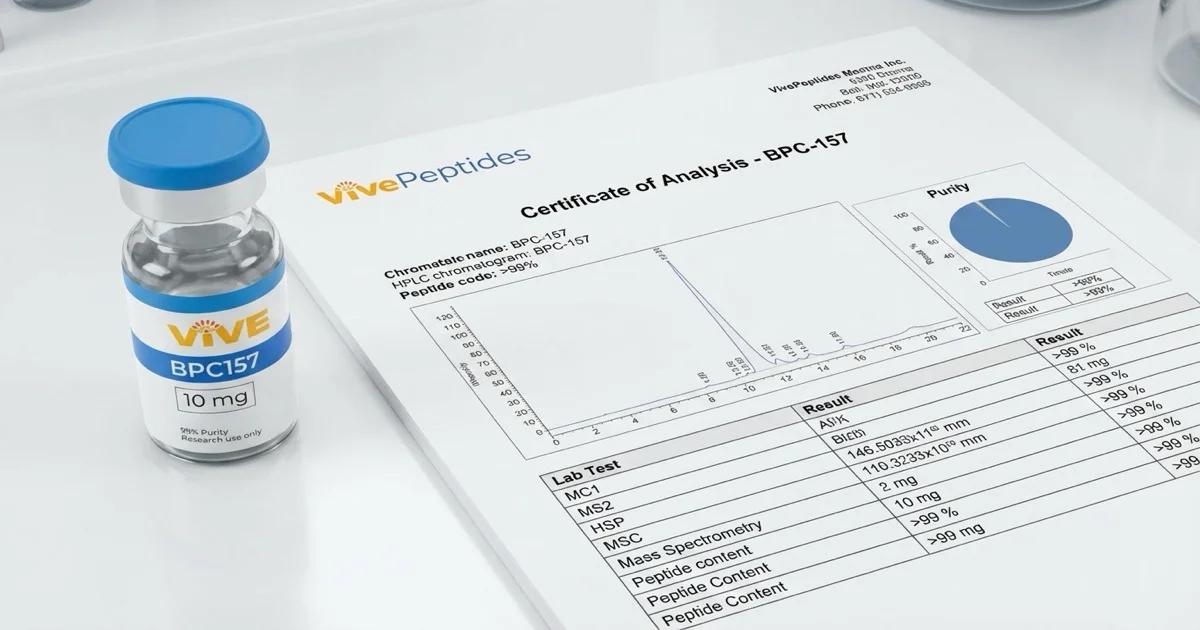
A COA issued by the vendor's own lab is not independent verification. The meaningful distinction is whether testing is conducted by an unaffiliated, accredited third-party laboratory. COAs should be batch-specific, not product-generic, meaning each lot has its own documentation, not a shared certificate applied across multiple production runs.
HPLC and Mass Spectrometry Testing
High-performance liquid chromatography (HPLC) confirms purity by separating and measuring individual components in a peptide sample. Mass spectrometry confirms molecular identity by measuring atomic mass. Both tests together verify that a compound is what it claims to be and that it is free of impurities that would compromise research validity. Purity thresholds of 99% or higher are the accepted standard for research-grade peptide science applications.
Batch Traceability
Researchers need to know which lot of a compound was used in a given experiment. A vendor without batch-level record-keeping cannot support reproducibility requirements. When reviewing a supplier's documentation practices, look for lot numbers that correspond to specific COAs, not aggregate product documentation.
Proper Storage and Handling
Amino acids are the building blocks of peptide chains, and those chains are susceptible to degradation when exposed to heat over time. A vendor's storage and handling practices directly affect whether the product you receive matches the purity documented on the COA. This is particularly relevant for longer, more structurally complex peptides and for sequences that contain cysteine or methionine residues.
U.S.-Based Independent Lab Verification
The most reliable documentation comes from accredited domestic laboratories operating under consistent regulatory frameworks. International lab certifications vary substantially in rigor and are harder to independently verify.
Regulatory Compliance and "Research Use Only" Labeling
Vendors who market peptides for human use, make therapeutic or health claims, or sell through platforms that imply clinical application are operating in a higher-risk compliance environment. Research-use-only positioning is not just a legal formality; it reflects how the product has been developed, tested, and is intended to be used.
Why VivePeptides Stands as the Strongest Alternative
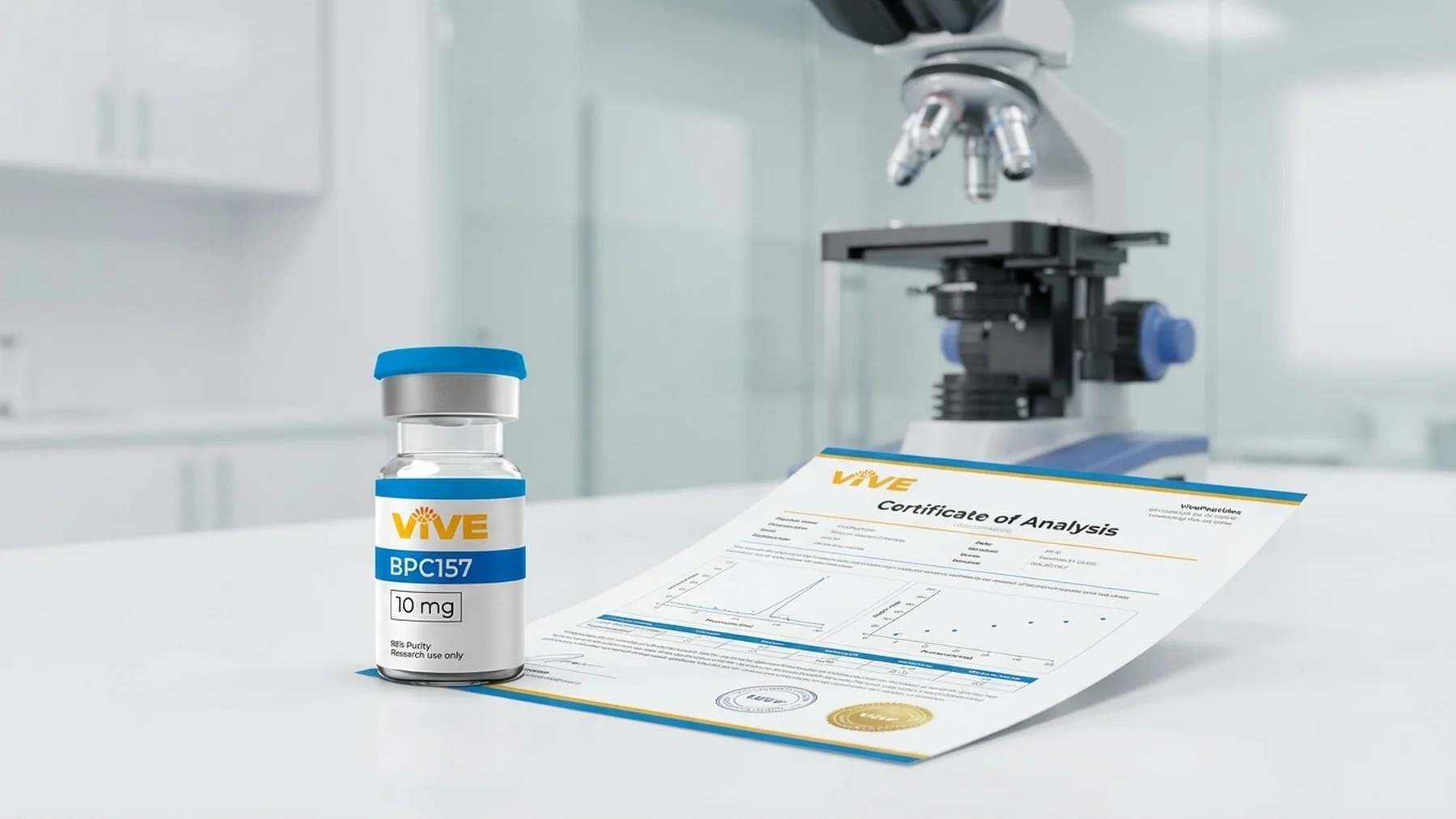
VivePeptides was built around the quality infrastructure that the research community has been asking for. Based in Phoenix, Arizona, the operation sources peptides through verified synthesis pathways and subjects each batch to independent U.S. laboratory testing before fulfillment.
The specifics matter here, because they are precisely what the Peptide Sciences failure illustrated as necessary.
Independent Lab Testing, Not In-House Verification
Every VivePeptides product is tested by an independent third-party laboratory. The COAs are batch-specific, meaning the documentation attached to a given order reflects testing on the exact production lot being shipped, not a generic product profile. Purity standards are held at 99% or higher across the catalog, consistent with the thresholds used in peer-reviewed research contexts.
Solid-Phase Peptide Synthesis Standards
VivePeptides compounds are produced using solid-phase peptide synthesis (SPPS), the established method for constructing amino acid sequences with structural precision. SPPS allows for controlled addition of amino acids one residue at a time, which directly affects the integrity of the final peptide chains. This synthesis methodology is the foundation of research-grade peptide science, and it requires rigorous quality controls at each stage to produce stable, properly structured compounds.
Fast U.S.-Based Fulfillment
All orders ship from Phoenix, Arizona, with domestic fulfillment designed to minimize transit time. Shorter shipping windows reduce the risk of environmental exposure during delivery, which is a practical consideration for maintaining peptide integrity between the lab and the researcher.
Catalog Depth Across Active Research Areas
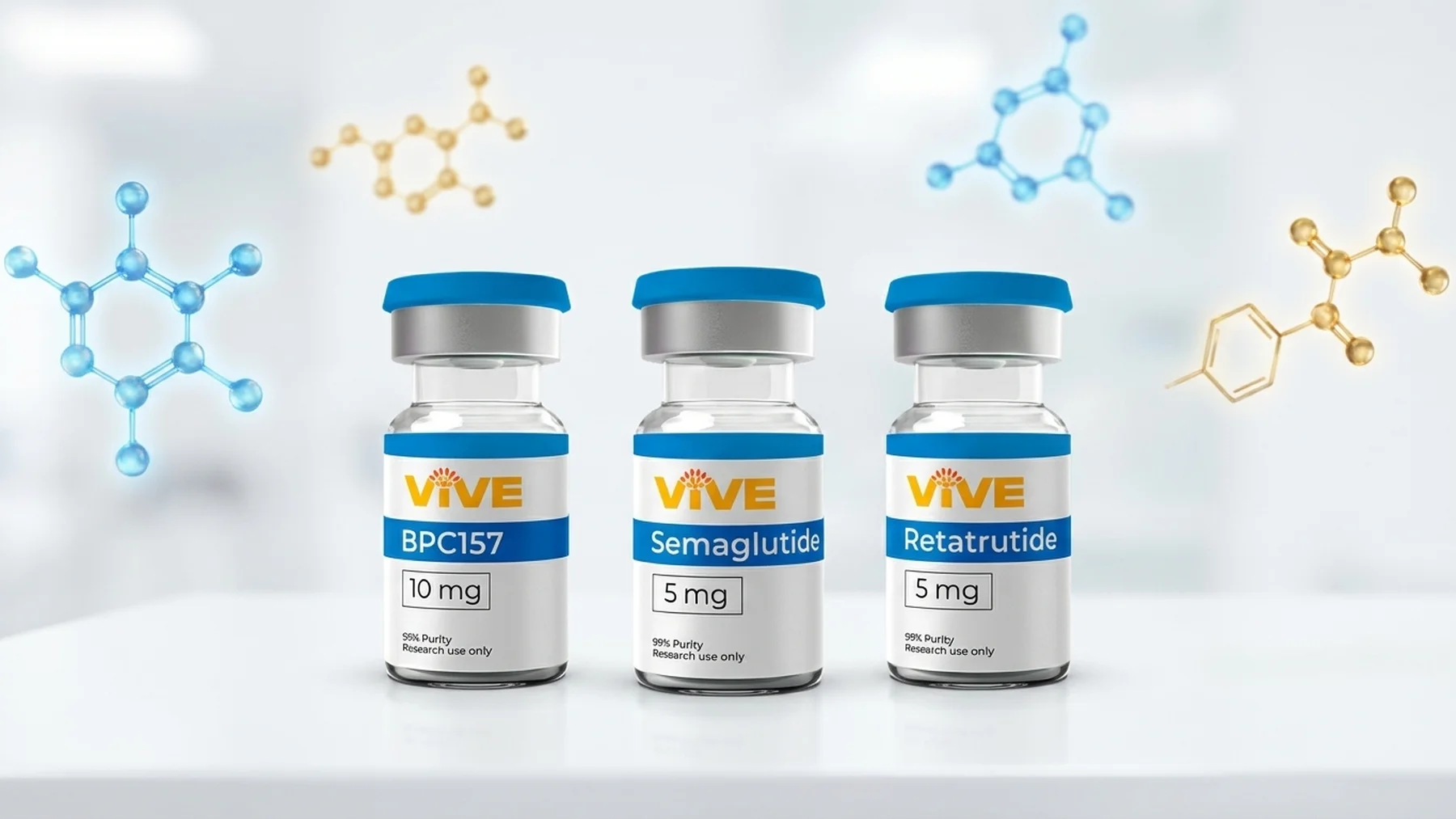
The catalog reflects the compounds that are most actively studied across metabolic, regenerative, and structural research domains. Researchers who were sourcing from Peptide Sciences can find direct catalog coverage at VivePeptides, including the peptide classes most central to active protocols.
Key Research Peptides Available at VivePeptides
The following products represent the most-searched compounds among researchers transitioning from Peptide Sciences. Each links to the corresponding product page, which includes the batch-specific COA and synthesis documentation.
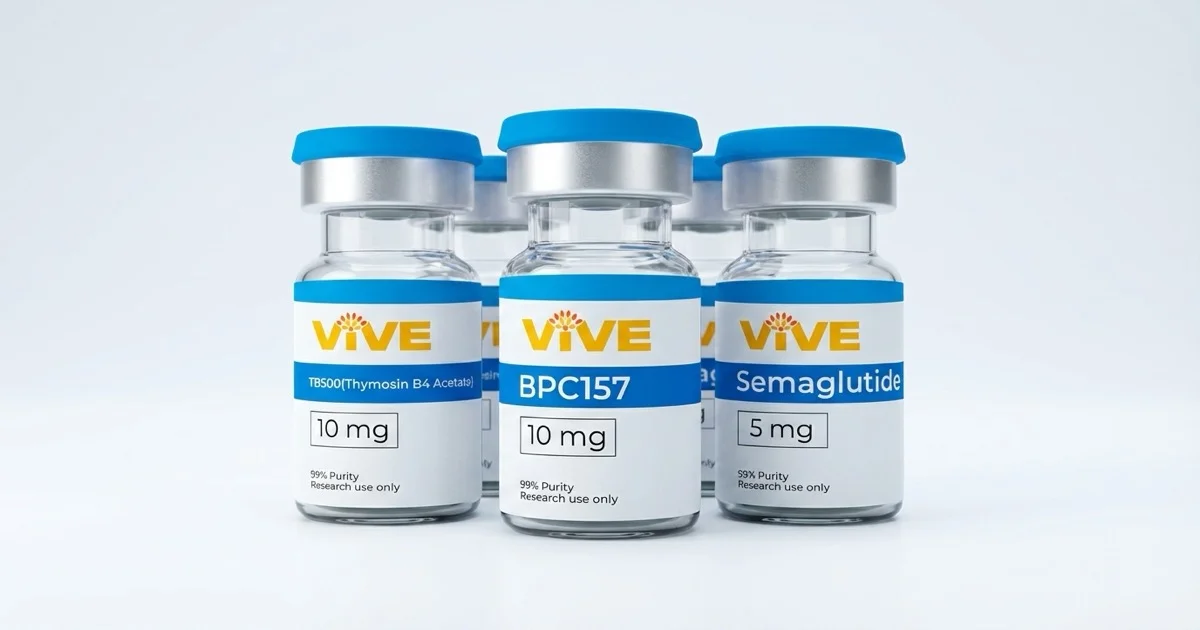
BPC-157 - Body protection compound 157 is a 15-amino acid peptide derived from a protective protein found in gastric juice. It is among the most actively studied peptides in connective tissue and cellular regeneration research. Its sequence stability and well-documented synthesis pathway make it a reliable starting point for researchers new to the peptide science space.
Semaglutide - A GLP-1 receptor agonist with significant presence in metabolic research literature. Semaglutide's structural design as a fatty acid-modified peptide increases its half-life compared to native GLP-1, making it useful for longer-duration protocol designs in preclinical research contexts.
TB-500 - Thymosin beta-4 fragment, commonly referred to as TB-500, is a synthetic version of a naturally occurring peptide involved in actin regulation and cellular development. It has been studied for its role in tissue modeling and is among the most consistently researched structural peptides in the catalog.
Retatrutide - A triple agonist compound targeting GLP-1, GIP, and glucagon receptors. Retatrutide represents the leading edge of incretin-based research and was specifically the compound where Peptide Sciences' quality failures were most clearly documented. VivePeptides' Retatrutide is verified through independent HPLC and mass spectrometry testing, with batch COAs available at time of purchase.
Tirzepatide - A dual agonist targeting GLP-1 and GIP receptors. Among the most studied incretin-class peptides currently in active research, tirzepatide's synthesis involves a C-terminal fatty di-acid modification that requires precise amino acid sequencing to produce correctly. Structural integrity is confirmed through mass spectrometry at the batch level.
For the complete list of available compounds, browse our full catalog, which includes additional peptides across metabolic, structural, and recovery research categories.
Red Flags to Avoid When Evaluating a Vendor
The Peptide Sciences situation, combined with broader FDA enforcement activity in 2025-2026, makes it important for researchers to vet vendors before committing to a supply relationship. The following patterns indicate elevated risk.
No Batch-Specific COAs
If a vendor provides one COA per product rather than one per lot, the documentation does not reflect what was actually tested before shipping. This is a structural quality control failure, not a minor omission.
In-House Testing Only
A vendor testing its own products without third-party verification has a conflict of interest built into the documentation process. Independent laboratory analysis is the only framework that provides meaningful assurance of purity.
Vague Synthesis Claims
Descriptions like "pharmaceutical-grade" or "research-grade" without specifying synthesis method, testing protocol, or purity threshold are marketing language, not scientific documentation. Research-grade peptide science requires specificity: what synthesis method, what purity percentage, what testing standard.
No Domestic Fulfillment or Slow Shipping
Extended transit times increase the risk of environmental exposure, which can degrade peptide purity before the product reaches the researcher. Vendors without U.S.-based fulfillment infrastructure add unnecessary shipping duration and logistical risk.
Health Claims or Human Use Marketing
Vendors who use clinical framing, describe products as treatments, or market through channels targeting end consumers rather than researchers are operating outside the research-use-only framework. This creates compliance exposure for the researcher as much as the vendor.
No Return Policy or Quality Guarantee
Legitimate research suppliers stand behind their documentation. A vendor without a quality assurance policy for failed COAs or compromised shipments is not operating as a scientific supply partner.
How to Verify a Vendor Yourself
Independent verification is the strongest protection researchers have against supply chain quality failures. Here is a practical methodology.
Step 1: Request the COA Before Ordering
A reputable vendor will provide the batch-specific COA for the product lot currently in inventory before the purchase is completed. If this documentation is not available on request, that is a disqualifying condition.
Step 2: Cross-Reference the Testing Laboratory
The COA will name the third-party laboratory. Verify that the laboratory is an independent, accredited facility, not an internal quality control team or an affiliated organization. A brief search of the lab's name and accreditation status is sufficient.
Step 3: Check for HPLC Chromatogram and Mass Spectrum
The COA should contain or link to the actual HPLC chromatogram showing peak separation and the mass spectrum confirming molecular weight. Documents that list only a final purity percentage without the underlying data cannot be independently verified.
Step 4: Review Independent Testing Databases
Organizations like Finnrick have published independent test results for peptide vendors across the industry. Cross-referencing a vendor's claimed purity with third-party test results provides an additional verification layer. This is precisely the step that would have flagged Peptide Sciences' Retatrutide failure prior to the vendor's closure.
Step 5: Evaluate the Shipping Protocol
Contact the vendor directly and ask about their fulfillment location, average shipping times, and how products are packaged. A vendor operating with proper logistics will answer specifically, with details about domestic warehousing and transit time expectations.
Step 6: Check for Research-Use-Only Compliance
Review the vendor's product pages, checkout process, and marketing materials for any human-use framing. Compliant vendors frame all compounds as being for research purposes, explicitly label products as not intended for human use, and do not suggest clinical application in any product description.
Frequently Asked Questions
Why did Peptide Sciences shut down?
Peptide Sciences closed on March 6, 2026, without advance notice to customers. The closure followed a period of escalating FDA enforcement activity, including warning letters and import blocks directed at domestic peptide suppliers. Independent testing had also identified quality failures, including an "E (Bad)" rating from Finnrick on Peptide Sciences' Retatrutide. The combination of regulatory pressure and documented quality control deficiencies preceded the closure.
Are there any alternatives to Peptide Sciences with the same catalog depth?
VivePeptides maintains coverage across the core compounds that were most active in Peptide Sciences' catalog, including BPC-157, Semaglutide, TB-500, Tirzepatide, and Retatrutide, with the addition of independent third-party COAs for each batch. Other vendors cited in research forums include SwissChems, Limitless Life Nootropics, Chemyo, and Ascension Peptides, though catalog depth and testing documentation vary significantly across those options.
What is the most important thing to check when choosing a peptide vendor?
Batch-specific third-party COAs with HPLC and mass spectrometry data are the baseline requirement. These documents confirm that the specific lot being shipped was independently tested for purity and structural identity. Purity of 99% or higher is the standard for research-grade applications.
What happened to orders that were in transit when Peptide Sciences closed?
The abrupt nature of the shutdown left many orders unresolved. Customers reported being unable to reach the company for refunds or status updates. This outcome underscores the importance of sourcing from vendors with established fulfillment infrastructure and clear quality guarantee policies.
Is it legal to buy research peptides in the United States?
Research peptides sold strictly for laboratory and research use are not prohibited for purchase in the United States. Vendors must not market them for human use, and buyers must use them in compliance with applicable research and institutional guidelines. The "Research Use Only" designation is a material legal distinction, not a formality. Researchers should consult their institution's compliance office regarding procurement and use requirements.
Explore the VivePeptides Research Catalog
The closure of Peptide Sciences removed a significant amount of catalog access from the research community overnight. VivePeptides exists to fill that gap with something the previous vendor could not consistently deliver: independently verified, batch-traceable, research-grade peptides shipped from a U.S.-based operation.
Explore our independently verified peptide catalog and access batch-specific COAs for every compound before ordering.
For Research Use Only. All products are intended strictly for laboratory research purposes. Not for human use, consumption, or clinical application. VivePeptides does not make health claims regarding any compound in its catalog.
Source methodology: Market context derived from publicly available information on the Peptide Sciences closure (March 2026), FDA enforcement activity as documented in public records, and independent third-party testing results from Finnrick. VivePeptides quality claims reflect current operational standards as of April 2026.
Research Use Only
All information in this article is intended for educational and research purposes only. VivePeptides products are not intended for human or veterinary use.