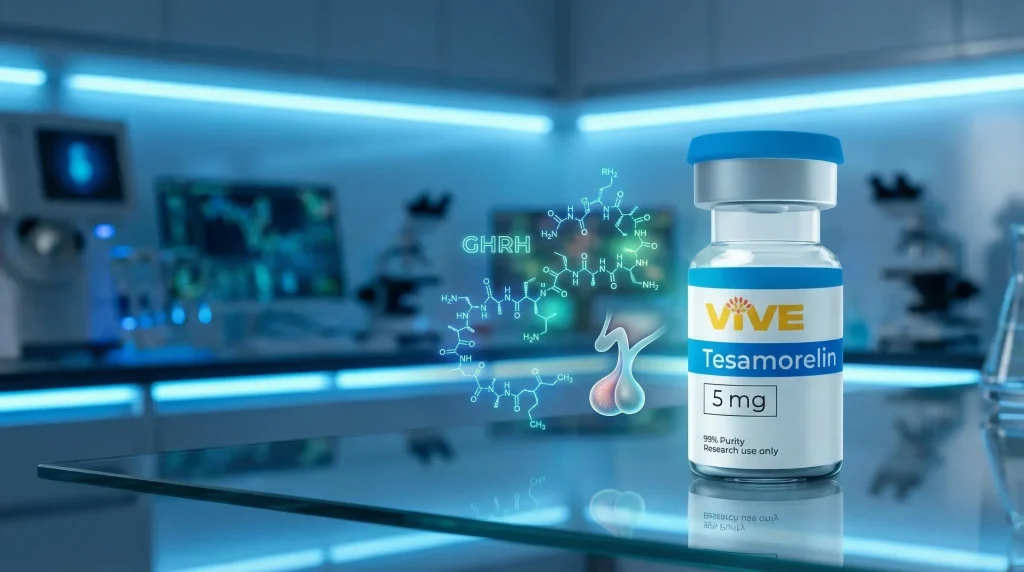
Tesamorelin is a synthetic peptide functioning as a growth hormone‑releasing hormone (GHRH) analogue. It is employed predominantly in research to evaluate effects on growth hormone (GH) secretion and associated metabolic pathways. This guide synthesises tesamorelin’s biochemical characteristics, mechanism of action, and principal research applications, and it summarises recommended dosage and handling procedures for use in laboratory investigations.
Tesamorelin is categorised as a GHRH analogue designed to stimulate pituitary GH release. Its molecular sequence emulates endogenous GHRH, enabling binding to GHRH receptors and activation of intracellular signalling cascades that elicit GH secretion. This classification defines tesamorelin as a research tool for studying GH regulation and its metabolic consequences.
A separate literature review provides an expanded overview of GHRH analogues, their mechanisms and clinical utilities.
GHRH Analogues: Mechanisms of GH Secretion & Clinical Applications
This review summarises current understanding of growth hormone‑releasing hormone (GHRH) and its actions: 1) stimulation of GH release and synthesis from pituitary GH‑producing cells (somatotropes), 2) promotion of somatotrope proliferation, 3) negative regulation by somatostatin (SST), GH and IGF‑1, 4) modulation across the lifespan and in response to metabolic challenges, and 5) the clinical application of analogues to manage conditions of GH excess or deficiency.
Update on regulation of GHRH and its actions on GH secretion in health and disease, 2025
Familiarity with tesamorelin’s biochemical parameters is necessary for experimental design and interpretation. The adjacent table summarises key identifiers and quality metrics relevant to laboratory use.
| Property | Value |
|---|---|
| CAS Number | 218949-48-5 |
| Molecular Weight | 5139.53 g/mol |
| Purity | ≥98% (verified by HPLC) |
These data indicate a defined molecular mass and high analytical purity (≥98% by HPLC), attributes that support use in controlled scientific studies.
Tesamorelin and other GHRH analogues, including sermorelin, share a common receptor‑mediated mechanism for stimulating GH release. Tesamorelin has documented chemical stability advantages relative to some analogues, which may affect pharmacodynamic consistency. This comparison emphasises the need to consider analogue‑specific properties when selecting compounds for research, including those listed at “GHRH analogs”.
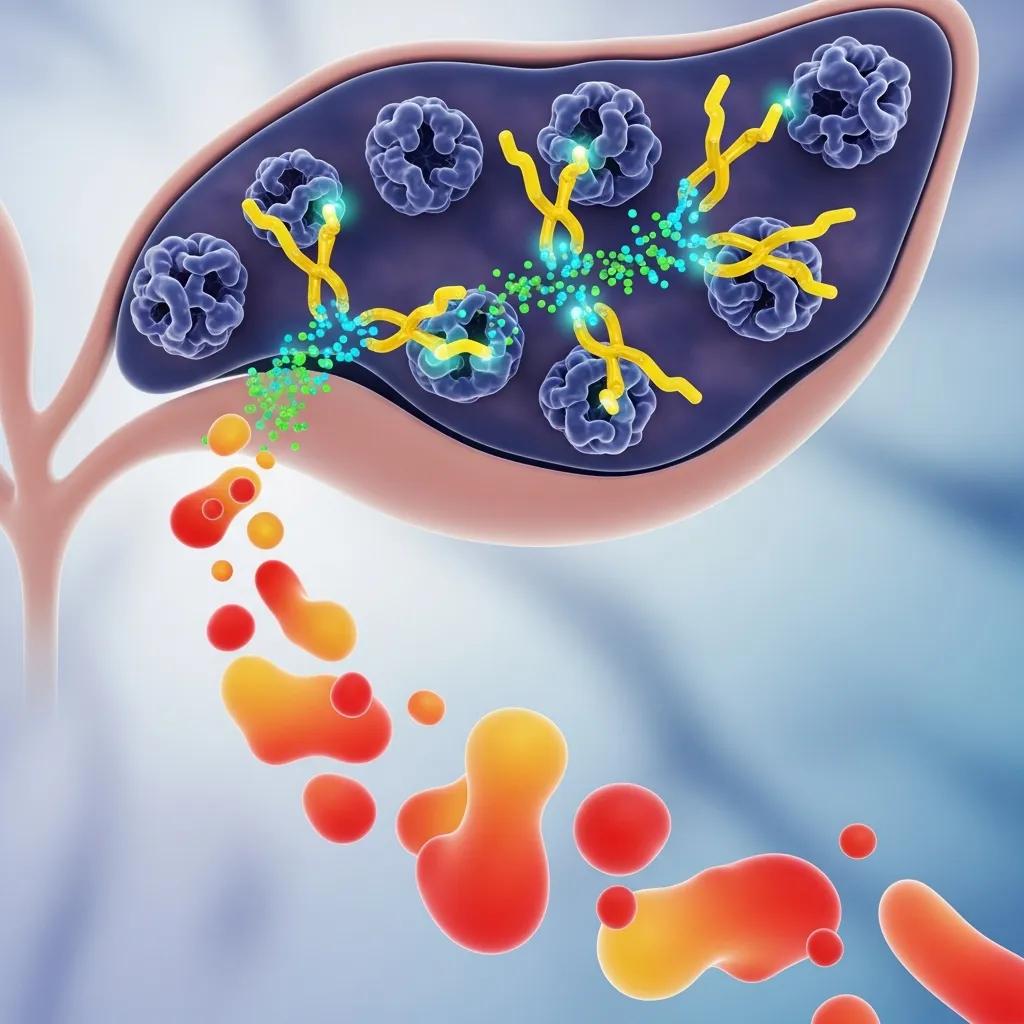
Tesamorelin binds to GHRH receptors on anterior pituitary somatotropes, initiating receptor‑coupled signalling that culminates in pulsatile GH secretion. This receptor interaction underlies tesamorelin’s capacity to modulate metabolic endpoints, which is particularly relevant in models of GH deficiency and altered body composition.
VivePeptides supplies research‑grade tesamorelin with documented quality control. The product is offered for purchase at an approximate price of $80.00.
Tesamorelin activity is mediated principally through GHRH receptor activation and subsequent intracellular signalling pathways that generate pulsatile GH release. Downstream engagement of the insulin‑like growth factor‑1 (IGF‑1) axis further links GH dynamics to metabolic regulation.
Comparative evaluation of GHRH analogues requires assessment of pharmacokinetic stability, receptor affinity and pharmacodynamic outcomes. Tesamorelin’s enhanced chemical stability has been associated with more consistent GH stimulation in some studies, which may yield more reproducible physiological responses in experimental settings.
Research applications for tesamorelin concentrate on GH secretion dynamics and associated effects on lipid metabolism. Clinical investigations have examined its potential to modify body composition and metabolic parameters in conditions such as obesity and metabolic syndrome.
In metabolic studies, tesamorelin is employed to evaluate effects on adipose distribution and metabolic biomarkers, including reductions in visceral adiposity and improvements in insulin‑sensitive indices. Preclinical and exploratory clinical work is also assessing putative neuroprotective effects where modulation of GH/IGF‑1 signalling may be mechanistically relevant to neurodegenerative processes.

Recent randomized clinical trials report that tesamorelin effectively stimulates GH secretion and produces favourable effects on body composition. Principal outcomes include statistically significant reductions in visceral adipose tissue and improvements in measures of insulin sensitivity in the studied cohorts.
A randomized clinical trial provides specific evidence of tesamorelin’s effects on visceral and hepatic fat in HIV‑infected patients with abdominal adiposity.
Tesamorelin’s Impact on Visceral and Liver Fat in HIV Patients
The objective of this study was to evaluate tesamorelin’s effect on visceral and liver fat. Design: double‑blind, randomized, placebo‑controlled trial conducted in 50 antiretroviral‑treated HIV‑infected men and women with abdominal fat accumulation at Massachusetts General Hospital, Boston. Tesamorelin, a GHRH analogue, was investigated primarily for its capacity to reduce visceral adiposity; effects on liver fat were assessed as a secondary endpoint.
Effect of tesamorelin on visceral fat and liver fat in HIV-infected patients with abdominal fat accumulation: a randomized clinical trial, H Lee, 2014
Adherence to established dosage and handling protocols is essential for experimental consistency and peptide integrity. Researchers should implement validated procedures for storage, reconstitution and administration aligned with supplier guidance and institutional regulations.
Standard dosing employed in the literature commonly ranges from 1 mg to 2 mg per day, adjusted according to study design and subject characteristics. Dose selection should be justified by the experimental objectives and ethical approvals governing the work.
For optimal stability, store tesamorelin at −20°C and protect from light. Reconstitute using sterile water for injection and follow aseptic techniques and supplier‑recommended procedures to preserve peptide integrity.
Tesamorelin synthesis is achieved via solid‑phase peptide synthesis, enabling precise sequence assembly and downstream purification. Research‑grade material should meet stringent purity criteria, typically ≥98%, to ensure experimental reliability.
Production commonly utilises solid‑phase synthesis followed by purification using high‑performance liquid chromatography (HPLC). These methods are standard for obtaining the high purity necessary for laboratory applications.
Analytical verification of purity is performed using HPLC and mass spectrometry. High purity is critical because contaminants or sequence variants can confound experimental results and compromise data validity.
Sensitive analytical approaches, such as immunoaffinity LC‑HRMS/MS, are required for accurate detection and identification of tesamorelin and related GHRHs in biological matrices, underscoring the necessity of rigorous purity assessment.
Tesamorelin Detection in Human Plasma: Immunoaffinity LC-HRMS/MS Method
The study aimed to develop a method for simultaneous detection of four distinct GHRHs and their metabolites in human plasma via immunoaffinity purification followed by nano‑ultrahigh‑performance liquid chromatography coupled to high‑resolution/high‑accuracy tandem mass spectrometry. Target analytes included Geref (Sermorelin), CJC‑1293, CJC‑1295, and Egrifta (Tesamorelin), as well as two metabolites of Geref and CJC‑1293. Analytes were captured from plasma using a polyclonal GHRH antibody in combination with protein A/G monolithic MSIA™ D.A.R.T.’S® prior to chromatographic separation and detection.
Qualitative identification of growth hormone-releasing hormones in human plasma by means of immunoaffinity purification and LC-HRMS/
MS, A Thomas, 2016
Qualified investigators may procure research‑grade tesamorelin from specialised suppliers such as VivePeptides, which provide documented purity specifications and quality assurance measures. Procuring authenticated material supports reproducible and defensible research outcomes.
Acquiring tesamorelin from established suppliers such as “VivePeptides” affords benefits including high analytical purity, independent third‑party testing and adherence to research‑grade quality standards. These assurances contribute to experimental reliability and regulatory compliance.
Implementation of structured product data and compliance with industry standards enhances transparency and traceability. Adherence to established documentation and testing protocols ensures that researchers access verified materials, thereby reinforcing the integrity of experimental work.