Insulin-like Growth Factor 1 Long R3 (IGF-1 LR3) is a synthetic analogue of endogenous IGF-1 engineered to increase receptor potency and prolong systemic half-life. It participates in the regulation of cellular growth, differentiation and metabolic processes and is therefore a focal agent in basic and translational research. Academic investigators employ IGF-1 LR3 to study muscle biology, regenerative medicine and other therapeutic domains. This document examines its biochemical modifications, mechanism of action and principal research applications while maintaining an emphasis on experimental use.
Successful recombinant production of IGF-1 LR3 is a prerequisite for its broader application in both clinical research and laboratory investigations.
Recombinant IGF-1 LR3 Production for Clinical & Scientific Use
Insulin-like growth factor-1 (IGF-1) is a pleiotropic protein hormone and has become an attractive therapeutic target because of its multiple roles in various physiological processes, including growth, development, and metabolism. Here, we report that human IGF-1 and its analog Long R3 IGF-1 (LR3 IGF-1) are recombinant expressed and produced in thePichia pastoris(P. pastoris) expression system through being fused with highly expressed xylanase XynCDBFV. Furthermore, purified IGF-1 and LR3 IGF-1 display excellent bioactivity of cell proliferation compared to the standard IGF-1. Taken together, high recombinant expression of bioactive IGF-1 and LR3 IGF-1 is acquired with the assistance of xylanase as a fusion partner inP. pastoris, which could be used for both clinical and scientific applications.
Recombinant expression of IGF-1 and LR3 IGF-1 fused with xylanase in Pichia pastoris, 2023
IGF-1 LR3 is a modified peptide variant of IGF-1 created to extend circulatory persistence and increase biological potency. Within experimental contexts its prolonged activity permits sustained receptor engagement relative to native IGF-1, which exhibits rapid clearance. This property renders IGF-1 LR3 useful for investigations requiring extended growth-factor signalling in vitro and in vivo models of disease.
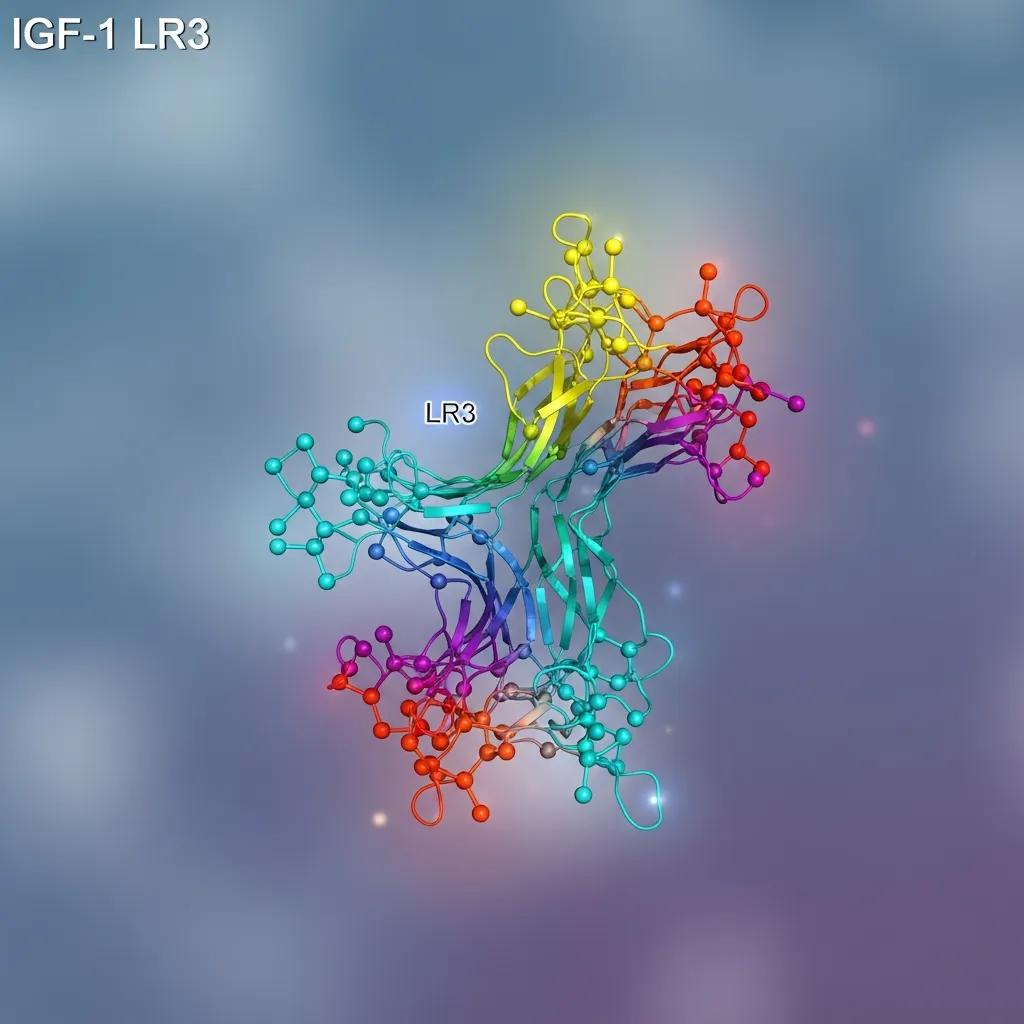
The primary sequence of IGF-1 LR3 comprises 83 amino acids and incorporates defined modifications to improve stability and receptor interaction. The principal substitution is arginine at position 3 (R3), which increases affinity for the IGF1 receptor. These structural changes facilitate activation of receptor-mediated signalling cascades that govern proliferation, differentiation and cell survival.
IGF-1 LR3 exhibits high-affinity binding to the IGF1 receptor, a prerequisite for its pharmacodynamic effects. Ligand engagement promotes receptor dimerisation and activates intrinsic tyrosine kinase activity, resulting in receptor autophosphorylation and downstream phosphorylation of insulin receptor substrate (IRS) proteins. Subsequent activation of the PI3K/Akt and MAPK pathways mediates the peptide’s growth-promoting and metabolic actions.
The extended half-life of IGF-1 LR3 relative to native IGF-1 derives principally from two molecular alterations: the R3 substitution and an N‑terminal extension. The R3 substitution confers increased resistance to proteolytic degradation, and the N‑terminal extension further stabilises the peptide in circulation. Together, these modifications prolong bioavailability and enhance suitability for experiments that require sustained activity.
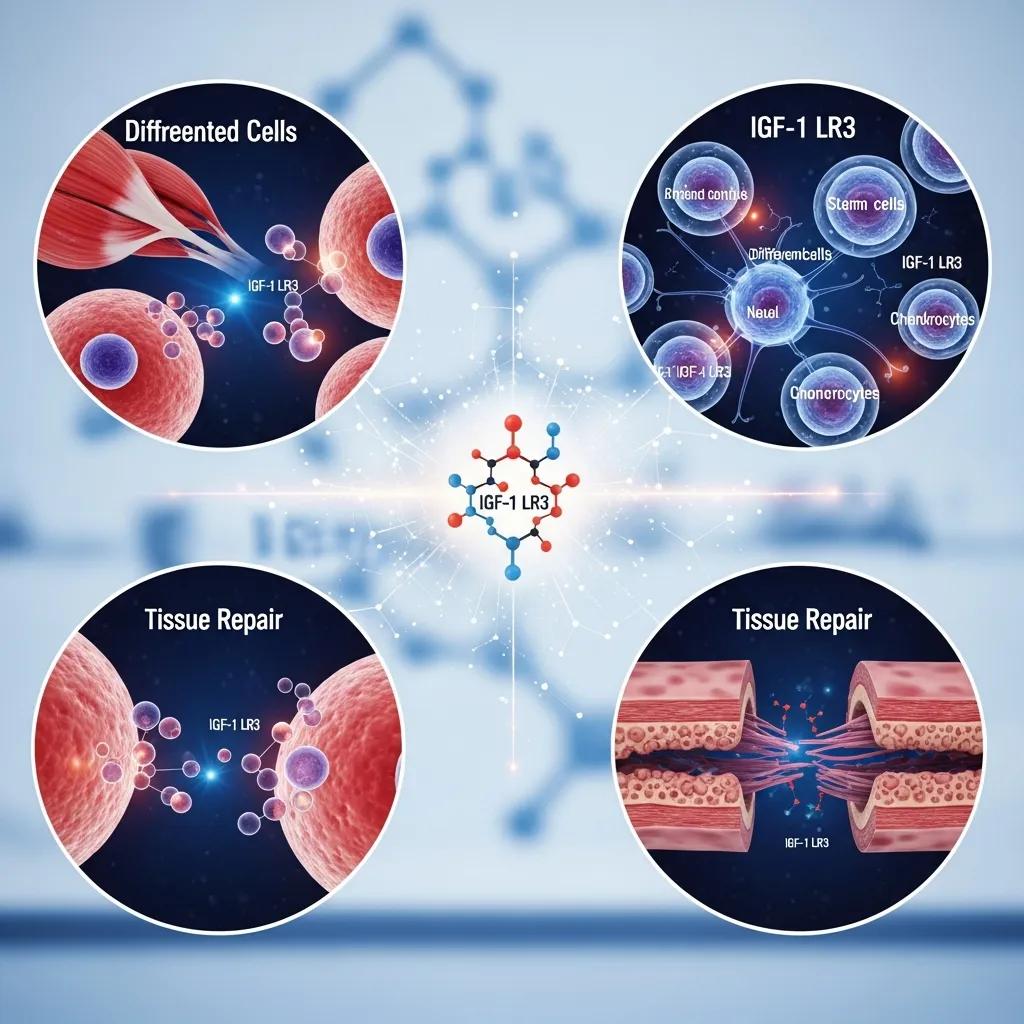
IGF-1 LR3 is employed across multiple research domains, notably muscle physiology, regenerative medicine and studies of cellular proliferation. Key application areas include the following list.
Additional investigations document IGF-1’s capacity to induce myogenic differentiation, a process central to muscle tissue engineering and regenerative strategies.
IGF-1 Stimulates Myogenic Differentiation for Muscle Tissue Engineering
In this study the myogenic differentiation potential of MSCs upon co-cultivation with myoblasts and under stimulation with hepatocyte growth factor (HGF) and insulin-like growth factor-1 (IGF-1) was evaluated. MSCs could be successfully differentiated into the myogenic lineage both in mono- and in co-cultures independent of HGF and IGF-1 stimulation by expressing desmin, myocyte enhancer factor 2, myosin heavy chain 2 and alpha-sarcomeric actinin. An increased expression of different myogenic key markers could be observed under HGF and IGF-1 stimulation.
Mesenchymal stem cells and myoblast differentiation under HGF and IGF-1 stimulation for 3
D skeletal muscle tissue engineering, A Weigand, 2017
Researchers seeking IGF-1 LR3 for laboratory use may obtain research-grade peptides from VivePeptides, which supplies IGF-1 LR3 intended for academic and scientific applications.
In regenerative-medicine studies, IGF-1 LR3 is applied to stimulate proliferation and to augment endogenous tissue-repair mechanisms. Its capacity to promote growth and lineage-specific differentiation has been evaluated in models of muscle injury and other tissue-damage paradigms, where it can modify experimental outcomes. Investigators are examining its role as an adjunct in stem-cell protocols to enhance therapeutic efficacy in controlled settings.
Specifically, experimental data demonstrate that IGF-1 can enhance neural differentiation of stem cells, supporting its investigation in neurological regenerative approaches.
IGF-1 Enhances Neural Differentiation of Stem Cells
This study indicated that IGF-1 could improve neural differentiation of human UC-MSCs and provided a novel strategy to enhance astrocyte differentiation of NPCs from UC-MSCs.
Effects of IGF-1 on neural differentiation of human umbilical cord derived mesenchymal stem cells, Y Chen, 2016
IGF-1 LR3 confers several experimental advantages compared with unmodified growth factors, including extended half-life permitting less frequent administration, enhanced receptor potency resulting in stronger downstream signalling, and reduced affinity for IGF binding proteins (IGFBPs) which increases the fraction of receptor-available peptide.
These attributes explain IGF-1 LR3’s frequent selection for experimental protocols that require sustained receptor activation and consistent biological response.
Adherence to established dosage and handling procedures is essential when working with IGF-1 LR3 in a research context. Recommended practices address reconstitution method, storage conditions and dose ranges appropriate to the experimental design.
To preserve peptide integrity, reconstitute IGF-1 LR3 using sterile water or an appropriate buffer and mix gently to avoid foaming or denaturation. Store aliquots at −20°C, protect from light and minimise freeze–thaw cycles to reduce degradation risk.
Dosage protocols for IGF-1 LR3 vary by experimental objective. Representative regimens include 100 mcg per day in muscle-growth studies, escalation to 200 mcg per day for specific regenerative applications, and routine monitoring of biological endpoints to guide dose adjustments.
Reported adverse effects in experimental contexts include hypoglycaemia attributable to insulin-like activity, local injection-site reactions and potential unknown long-term consequences. The extended safety profile has not been fully characterised; investigators should implement appropriate monitoring and risk-mitigation measures.
Regulatory and compliance frameworks govern the procurement, handling and use of IGF-1 LR3 in laboratory settings. Researchers must observe institutional and national guidelines, maintain accurate documentation, employ approved handling procedures and report adverse events as required to ensure ethical and reproducible research conduct.
Compared with native IGF-1, IGF-1 LR3 exhibits prolonged systemic persistence, increased receptor potency and differential binding to IGF binding proteins. These distinctions make IGF-1 LR3 more appropriate for studies that require extended growth-factor signalling while native IGF-1 may be preferable for short-duration applications.
Pharmacokinetic differences include enhanced absorption profiles linked to structural modifications, wider temporal distribution in the circulation due to an extended half-life, and reduced elimination rates relative to native IGF-1, all of which contribute to prolonged pharmacological activity.
To maintain experimental integrity, ancillary reagents for peptide work should be of appropriate quality. BAC Water from VivePeptides is provided for peptide reconstitution and may be used where compatible with protocol requirements.
Peptide purity and synthesis methodology directly affect experimental reproducibility and biological activity. High-purity products and validated synthesis techniques, such as solid-phase peptide synthesis, reduce confounding impurities and support accurate, reproducible outcomes. Researchers should source IGF-1 LR3 from reputable suppliers and verify quality specifications prior to use.
For investigators pursuing complementary research, BPC-157, available from VivePeptides, may offer additional utility in regenerative-study frameworks.