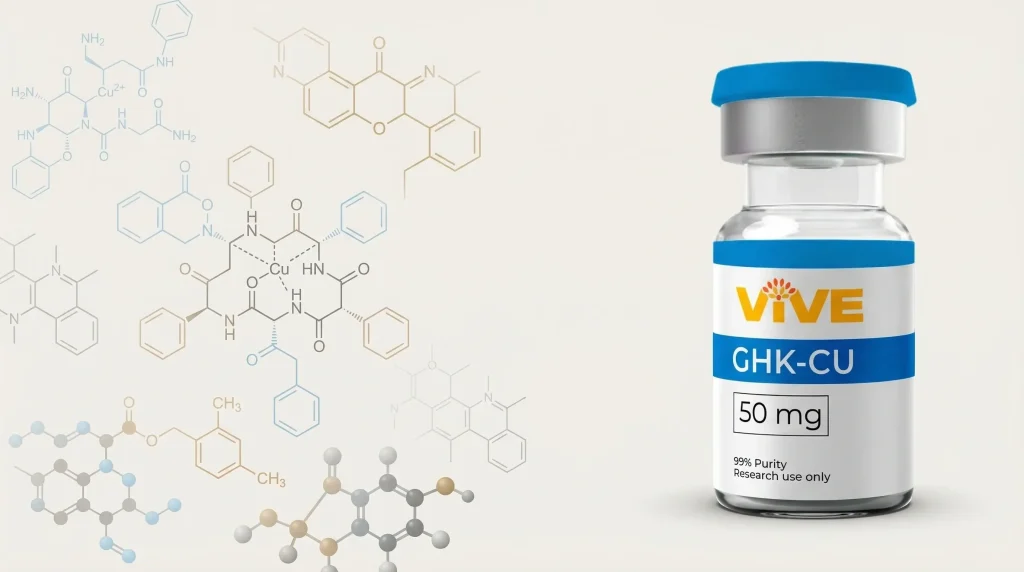
GHK-Cu (Glycyl-L-histidyl-L-lysine copper peptide) is an endogenous tripeptide involved in multiple physiological processes. This guide provides a systematic review of its molecular architecture, copper coordination chemistry, and documented biological activities, with particular emphasis on tissue regeneration and cutaneous repair. The content is intended to inform biomedical researchers and clinicians about the peptide’s properties, mechanisms of action, and practical considerations for experimental and clinical research. Sections include molecular structure and chemistry, copper binding, physicochemical characteristics, biological functions, recent literature, and recommended practices for procurement and handling.
GHK-Cu is a tripeptide consisting of glycine, histidine and lysine. The molecular formula is reported as C12H18N4O4S and the molecular mass approximately 340.47 g·mol−1. The primary sequence and side-chain functionalities permit coordination to transition metal ions, notably copper(II), which contributes to the complex’s thermodynamic stability and observed bioactivity in experimental systems.
GHK-Cu demonstrates high affinity for divalent copper primarily via the histidine imidazole and backbone coordination sites, forming a copper(II) coordination complex that stabilises the peptide. This chaperoning function facilitates enzymatic and regulatory activities linked to antioxidant defence and transcriptional modulation. The coordination chemistry of GHK-Cu underpins its relevance for regenerative medicine research.
Research-grade GHK-Cu is commonly supplied at purities exceeding 95%. Quality control typically employs high-performance liquid chromatography (HPLC) to quantify purity and detect impurities. Appropriate storage—cool, dry and protected from light—is required to preserve chemical stability. These parameters are essential for reproducible experimental outcomes.
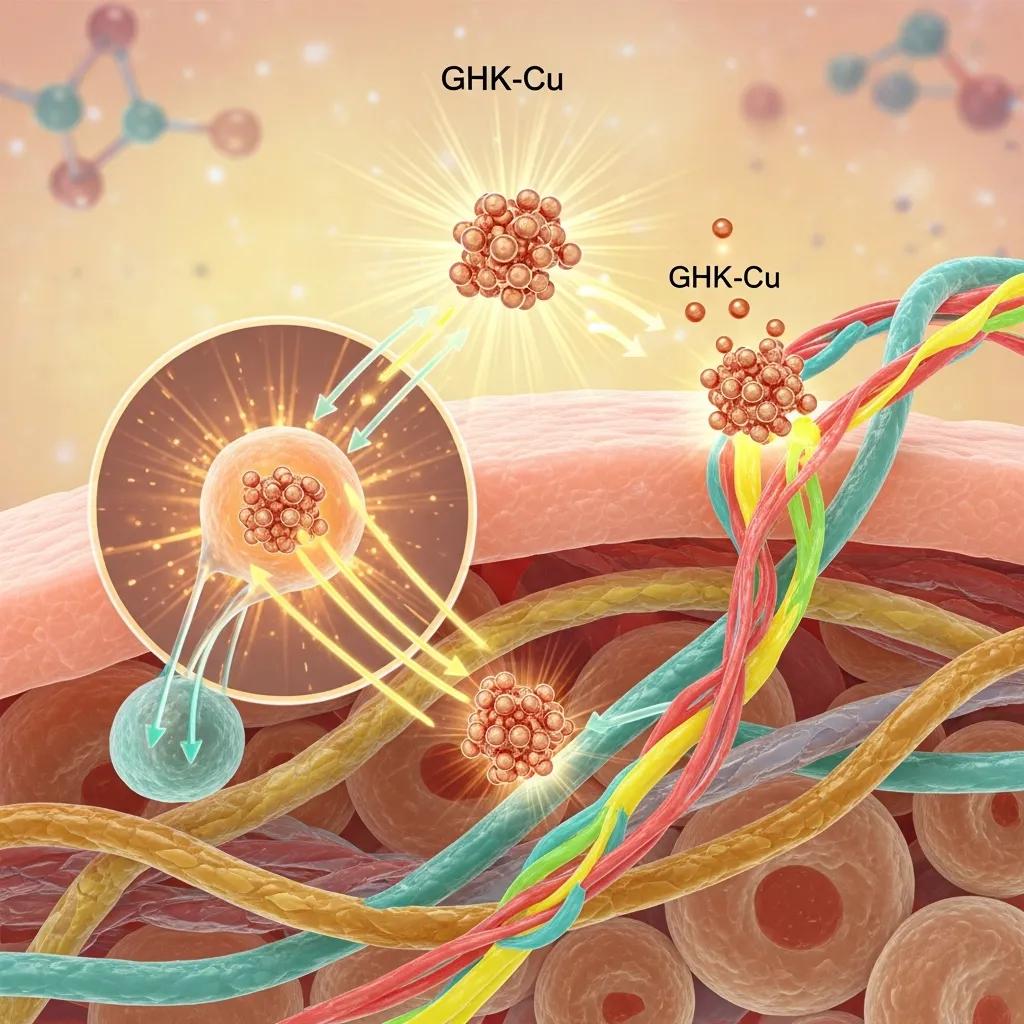
GHK-Cu has been associated with multiple biological functions, including promotion of tissue regeneration, facilitation of wound healing and modulation of gene expression profiles. Mechanistically, the peptide stimulates synthesis of growth factors and extracellular matrix components and activates intracellular signalling cascades that increase collagen production and influence skin biomechanics. These activities support its investigation in dermatological and regenerative applications.
| Biological Function | Mechanism | Evidence Level |
|---|---|---|
| Tissue Regeneration | Stimulates growth factor production | High |
| Wound Healing | Enhances collagen synthesis | High |
| Gene Expression | Modulates signaling pathways | Moderate |
GHK-Cu contributes to tissue regeneration chiefly by upregulating collagen synthesis and modulating growth factor activity. It promotes fibroblast proliferation and migration, activities that are central to wound closure. In addition, GHK-Cu has been demonstrated to activate copper-dependent enzymes implicated in extracellular matrix remodelling. The combination of these effects supports its evaluation in therapeutic strategies addressing skin injury and age-related tissue decline.
Ongoing studies investigate advanced formulations of copper peptides, including dimeric constructs, for application in complex wound-healing contexts such as diabetic ulcers.
Dimeric Copper Peptide Hydrogel for Diabetic Wound Healing
Diabetic wounds require continuous and coordinated modulation of the microenvironment concurrent with tissue regeneration, which remains a significant challenge. As a proof of concept, we herein propose to use dimeric copper peptide (D-CuP) for diabetic wound treatment. The D-CuP is synthesized and then incorporated into a reactive oxygen species (ROS)-responsive hydrogel matrix to improve therapeutic compliance, culminating in the formulation of G/D-CuP. Compared to monomer copper peptide (M-CuP), a wound healing agent, D-CuP exhibits multivalency, enhanced biological stability against proteases, and broad biological activities.
Dimeric copper peptide incorporated hydrogel for promoting diabetic wound healing, 2025
GHK-Cu influences cellular signalling networks and has been shown to activate antioxidant enzyme systems, thereby mitigating oxidative stress-related damage. These modulatory effects on redox homeostasis and gene regulatory programmes contribute to the peptide’s observed benefits for cellular integrity and cutaneous health in experimental models.
GHK-Cu has been evaluated extensively within skin biology, wound-healing research and regenerative medicine. Experimental and clinical reports document enhanced repair mechanisms and improvements in markers associated with aged skin. Case studies report reductions in the visible appearance of fine lines and wrinkles when applied in controlled formulations, supporting its utility in investigational cosmetic science.
GHK-Cu is employed across dermatology, wound biology and gene expression research. Its pro-regenerative and gene-modulatory properties render it pertinent to studies of skin disorders, traumatic injury repair and investigations into cellular ageing and regenerative therapeutics.
Studies published between 2021 and 2023 have reported evidence of GHK-Cu efficacy in several therapeutic contexts. Clinical investigations have yielded encouraging outcomes for skin repair and attenuation of ageing indicators. Market analyses document growing interest in GHK-Cu-containing products, reflecting increased research and commercial attention within skincare and regenerative therapy sectors.
GHK-Cu is routinely synthesised via solid-phase peptide synthesis (SPPS), which permits precise sequence assembly and control of product purity. Post-synthesis quality control procedures are implemented to verify compliance with established purity specifications. Adherence to these production and testing standards is necessary to ensure experimental reliability.
Production methods for research-grade GHK-Cu include SPPS and, in some instances, liquid-phase synthesis. These techniques are complemented by analytical verification—principally HPLC and mass spectrometry—to confirm identity, purity and conformity with research-grade criteria.
Verification of purity and regulatory compliance for GHK-Cu typically involves HPLC analysis and, where applicable, independent third-party testing. Mass spectrometric characterisation is used to confirm molecular identity and detect potential contaminants, thereby providing assurance of material integrity for research use.
Researchers may procure GHK-Cu peptide from specialised suppliers offering research-grade materials. Handling should follow laboratory best-practice: maintain aseptic technique where required, observe recommended storage conditions and use materials exclusively for authorised research purposes. Supplied material is typically certified at ≥95% purity by HPLC.
When acquiring research-grade GHK-Cu, investigators should comply with supplier eligibility criteria, establish appropriate account credentials for procurement and adhere to specified payment and handling instructions to ensure proper chain of custody and storage.
GHK-Cu should be stored in a cool, dry environment, protected from light to preserve stability. Laboratory handling must follow aseptic procedures where applicable to prevent contamination. Observance of supplier-recommended storage and handling instructions is required to maintain peptide efficacy during experimental use.
For comparative research on peptide modalities, BPC-157 is an additional peptide commonly evaluated in preclinical studies.